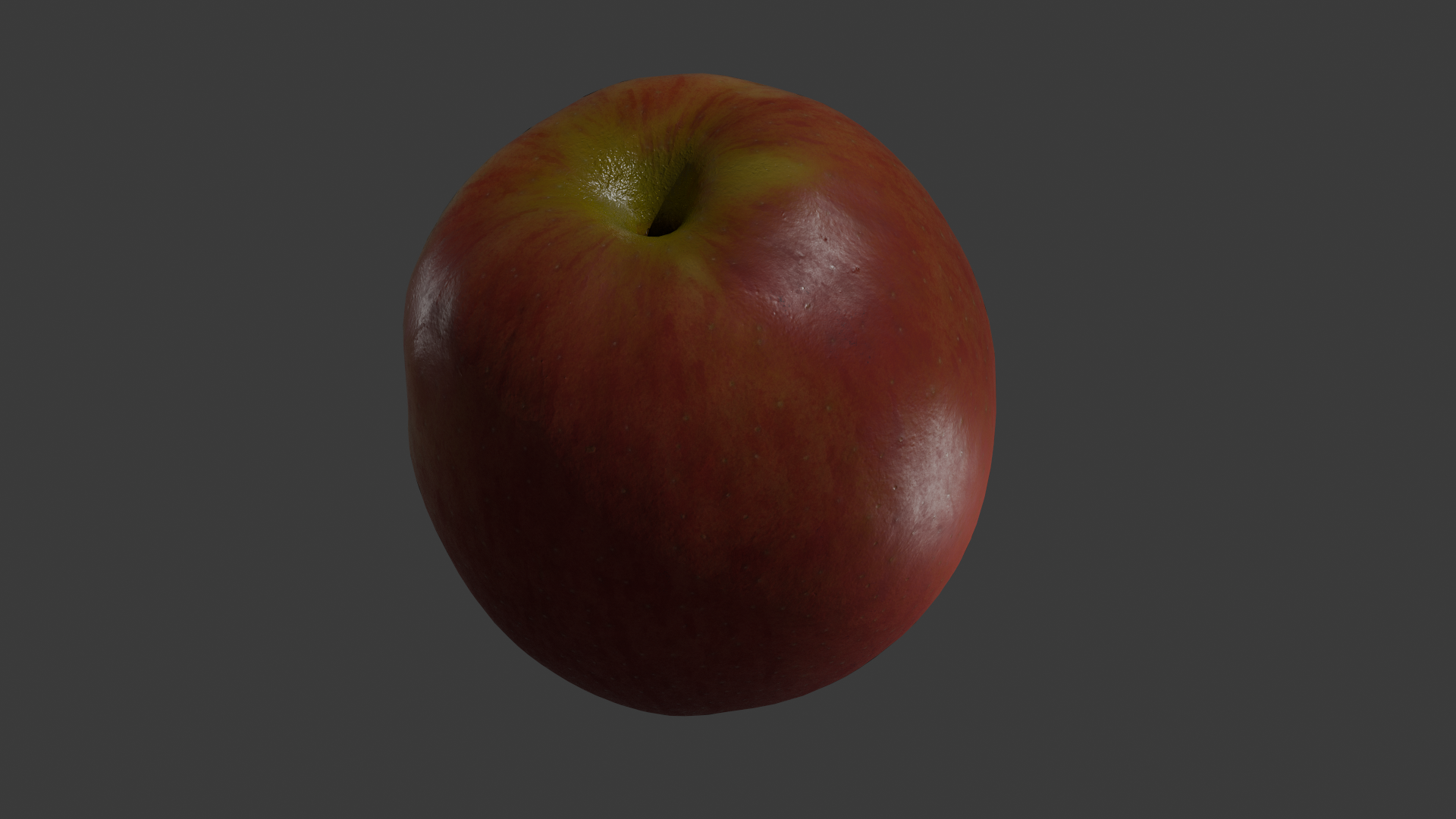
Apple, spectral transport, single area light.Hyperoche Render
What wavelength sampling changes
An RGB renderer carries three values per ray. Hyperoche Render carries a wavelength. Every effect below falls out of that decision; none of it is a shader trick.
Rendering Support
Spectral rendering,Path traced spectral and RGB rendering, gpu/cpu rendering, viewport preview, final rendering, Oidin or built-in denoising, Glass/refraction, dispersion, thin films, blackbody, volumetrics, gas liquid
Inside Blender
Installs as an add-on with a live preview. Switch between RGB and spectral transport per render: preview in one, finish in the other.
Not yet supported
Hair
Minimum Requirement
GPU: GeForce RTX 20-series, Radeon RX 6000 or a cpu which was release in last 11 years
OS: Windows 10, 11, Linux distro which support glibc 2.39 or higher like Ubuntu 24.04, rhel 10.2, opensuse 16.0
Blender: Full support 4.2LTS, 4.5LTS, 5.2LTS, unsupported but works on non LTS versions between 4.2-5.3
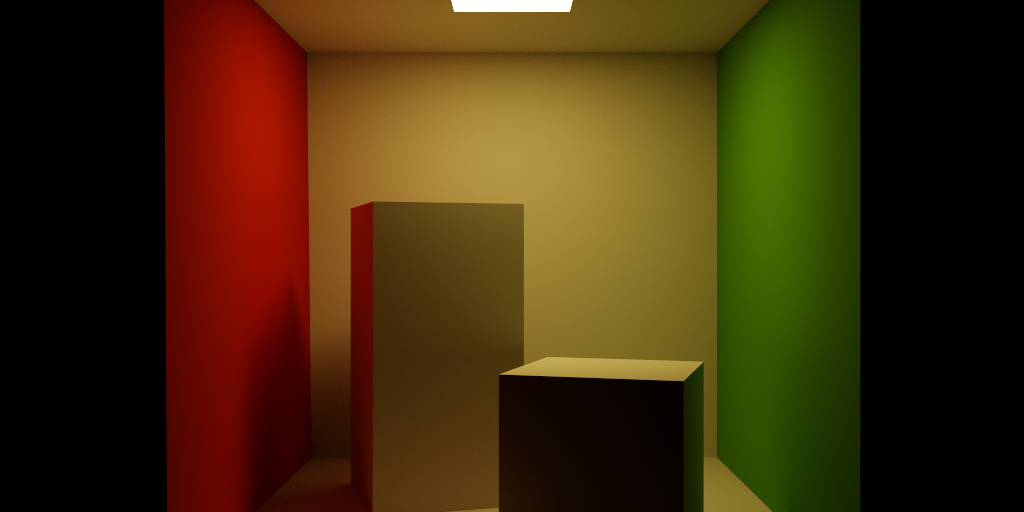
Hyperoche RenderCornell box. Indirect colour bleed with no light-transport cheats.Hyperoche Render
Built on an engine that already runs real software
Built from a real-time engine, designed for offline rendering.
Hyperoche Render is a native C++ renderer built on Hyperoche's Vulkan rendering and systems infrastructure. The same underlying technology is used across production software and visualization projects.More about the studio →
Early access
$40for early access
Purchase and you get to keep it for ever
Perpetual licence. Royalty-free. Cannot be revoked.
Every build from now through 1.x, as they ship.
Blender add-on, Windows and Linux. Runs offline.
Vulkan ray query GPU: GeForce RTX 20-series, Radeon RX 6000, or newer. CPU rendering.
Hyperoche Renderer does not support real-time rendering though it is a submodule of real-time rendering engine.